Hyaluronic Acid in Humid vs Dry Climates
Hyaluronic acid draws water into skin, but climate changes how well it works. How to use it in humid Mumbai and dry Delhi winters without making skin drier.

Your skin feels fine in Mumbai, then tight and flaky the week you visit family in Delhi in December. Same face, same products. The difference is the air, and it changes how one ingredient in particular behaves. Hyaluronic acid is one of the most popular ingredients in skincare, and one of the most misunderstood. It is gentle, suits every skin type and makes skin look plumper within minutes. But how well it works depends on something no label mentions: the air around you.
India covers almost every climate imaginable, from Chennai’s year-round humidity to the bone-dry air of a Delhi December. Here is how to make hyaluronic acid work in both.
What hyaluronic acid is
Despite the name, hyaluronic acid (HA) is not an exfoliating acid. It is a sugar molecule your body already makes, found in skin, joints and eyes. In skin, it binds water and helps keep the tissue plump and flexible.
In skincare, it works as a humectant: a substance that attracts water. HA is often said to hold up to 1,000 times its weight in water. The exact number depends on conditions, but it is very effective at holding moisture at the surface of the skin.
Where does the water come from?
This is the key question. A humectant draws water from two places:
- The environment, when the air is humid.
- The deeper layers of your skin, when the air is dry.
In humid air, HA pulls moisture from the atmosphere into the top layer of the skin. Great.
In very dry air, there is little water in the atmosphere to draw from, so HA can pull water up from deeper skin. If nothing seals it in, that water evaporates. Skin can end up feeling tighter.
Using HA in humid climates
Mumbai, Kolkata, Chennai, Kerala, the Northeast, and most of India during the monsoon.
- Keep it light. A hyaluronic serum plus a gel moisturiser is often all oily or combination skin needs.
- Oily skin can skip moisturiser some days and use HA alone under sunscreen, if the skin feels comfortable.
- Choose gel-cream textures. Neutrogena Hydro Boost-style water gels combine HA with a light base.
- Do not overdo layers. Heat and humidity plus heavy products equals congestion.
Using HA in dry climates
Delhi NCR, Punjab, Rajasthan and the hills from November to February, and anywhere with air conditioning running all day.
- Apply to damp skin, straight after cleansing or after misting with water.
- Seal with a cream moisturiser containing ceramides, fatty acids or squalane.
- Consider occlusives at night. A thin layer of a balm or petroleum jelly on very dry patches locks moisture in.
- Shorten hot showers. Hot water strips oils, which makes dryness worse.
Hyaluronic acid does not create water. It holds whatever water you give it, so give it some.
The air-conditioning problem
Many people in hot cities spend the whole day in air-conditioned offices and cars. AC dries out indoor air, so your skin may behave as if it is in a dry climate even during a humid summer. If your face feels tight by evening despite humid weather outside, treat it like dry-climate skin: damp skin, HA, then a moisturiser.
Molecular weight, briefly
Labels sometimes mention “multi-molecular” or “low molecular weight” HA:
- High molecular weight stays on the surface and forms a hydrating film.
- Low molecular weight may reach slightly deeper, though very small fragments can occasionally cause irritation in sensitive skin.
A blend is a sensible default. Concentration on the label (for example 2%) often refers to the total HA complex, not pure HA, so do not compare products only by that number.
How to use HA in your routine
- Cleanse.
- Leave skin damp, or mist it.
- Apply a few drops of HA serum.
- Apply any treatment serum (niacinamide, vitamin C), or apply those before HA if they are thinner.
- Moisturise.
- Sunscreen in the morning.
HA pairs with everything, including retinol, acids, HA pairs with everything, including HA pairs with everything, including retinol, acids, niacinamide and vitamin C. It is a great buffer on retinol nights., acids, niacinamide and vitamin C. It is a great buffer on retinol nights. and vitamin C. It is a great buffer on retinol nights.
Alternatives and partners
- Glycerin is an older, cheaper and very effective humectant found in most moisturisers.
- Snail mucin essences combine humectants with soothing ingredients; popular with dry and sensitive skin.
- Ceramides repair the barrier so water stays in. Combining humectants with ceramides gives the best results in dry weather.
Dehydrated vs dry skin
These sound the same but are different problems, and hyaluronic acid only fixes one of them fully.
Dry skin is a skin type: it makes too little oil. It feels rough, flaky and tight most of the time. It needs oils and lipids (ceramides, fatty acids, squalane) as well as water.
Dehydrated skin is a temporary condition: it lacks water, even if it is oily. It looks dull, shows fine “crinkly” lines when you gently pinch it, and can feel tight yet shiny at the same time. Air conditioning, harsh cleansers, acne treatments and dry winters cause it.
Hyaluronic acid is excellent for dehydration. For true dry skin, it helps, but it must be paired with a richer moisturiser.
Hyaluronic acid for men
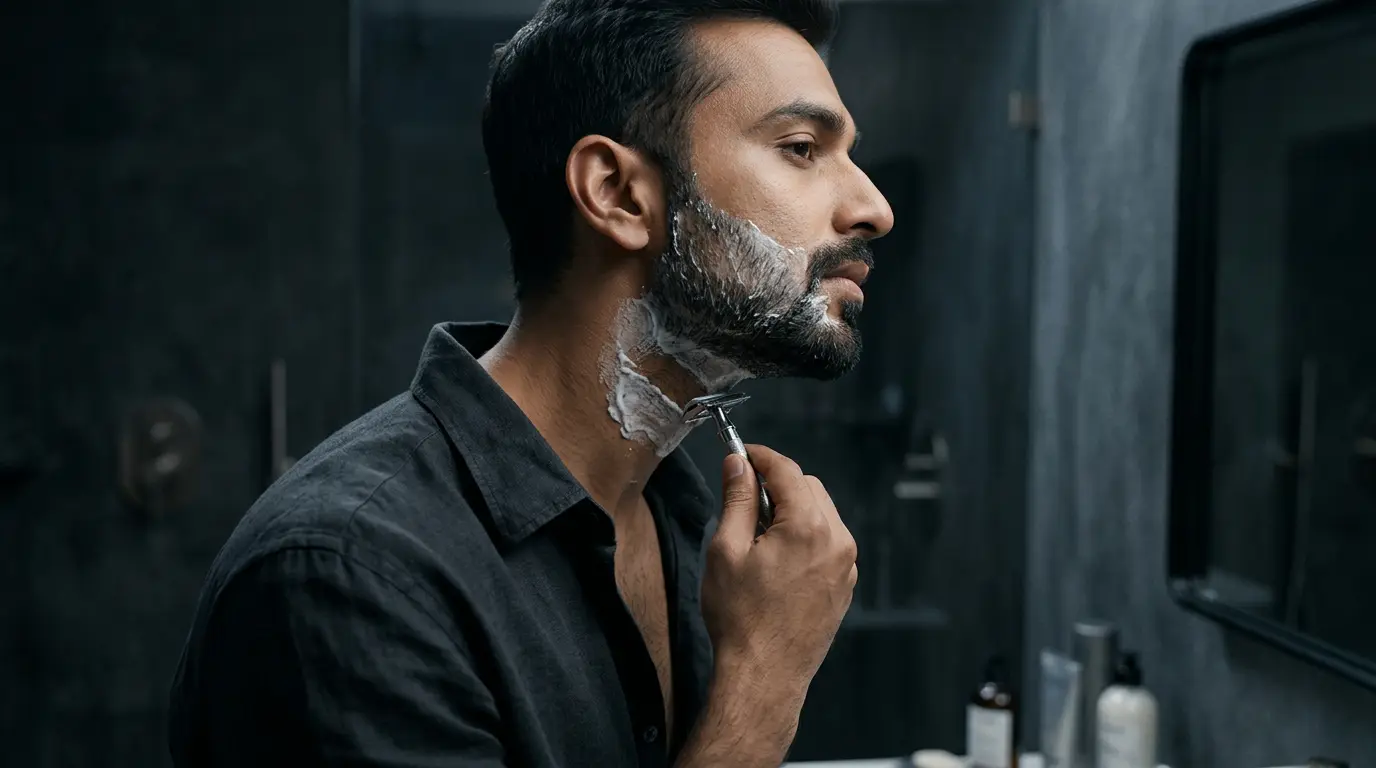
Shaving, harsh soaps, and skipping moisturiser leave a lot of men’s skin dehydrated rather than truly oily. A hyaluronic serum after shaving is a simple fix: it soothes the tight feeling without the greasy finish many men dislike. Look for one with panthenol (vitamin B5), which also calms post-shave irritation.
How to choose a hyaluronic acid product
- Short ingredient list, with sodium hyaluronate or hyaluronic acid near the top.
- No added fragrance or high alcohol content, which undo the hydration.
- Serum for layering, or a gel-cream if you want hydration and moisture in one step.
- Supporting humectants such as glycerin, panthenol or beta-glucan are a bonus.
You do not need an expensive product. Hyaluronic acid is inexpensive to formulate, and many budget serums perform as well as premium ones.
Common mistakes
- Applying to bone-dry skin in winter and skipping moisturiser.
- Expecting HA to fix acne, pigmentation or wrinkles on its own. It hydrates; that is its job.
- Using too much. Two or three drops cover the face. More can feel tacky.
- Buying a “hyaluronic” product where it is listed near the bottom of the ingredient list.
Does drinking water hydrate skin?
Drinking enough water matters for your health, and severe dehydration shows in the skin. But for most healthy people, drinking extra water beyond normal needs does not noticeably hydrate the outer layer of the face. That layer loses water to the air, and its hydration depends mostly on the barrier and what you put on it. Topical humectants like hyaluronic acid, plus a good moisturiser, make a much bigger visible difference.
The seasonal plan
Monsoon and humid summer: HA serum plus gel moisturiser, or HA alone for oily skin.
Dry winter: damp skin, HA serum, cream moisturiser with ceramides, plus a balm on dry patches at night.
Transition months: watch how your skin feels at 6 pm. Tight means add richness. Greasy means remove a layer.
See the full hyaluronic acid profile in our Ingredient Table.
Products mentioned
*Prices are approximate at the time of writing. Check the retailer for today's price, or compare all products.
Frequently asked questions
Can hyaluronic acid make my skin drier?
In very dry air, if applied to dry skin and not sealed with moisturiser, a humectant can pull water from deeper skin layers and let it evaporate. Applying it to damp skin and following with a moisturiser prevents this.
Is hyaluronic acid good for oily skin?
Yes. It hydrates without oil. In humid weather, oily skin can often use a hyaluronic serum with a light gel moisturiser, or even in place of a moisturiser.
What molecular weight should I look for?
Formulas that combine different molecular weights hydrate the surface and slightly deeper layers. Very low molecular weight forms can occasionally irritate sensitive skin, so a blend is a good default.
This article is for education only and is not a substitute for advice from a qualified dermatologist. Patch test new products. See our medical disclaimer.