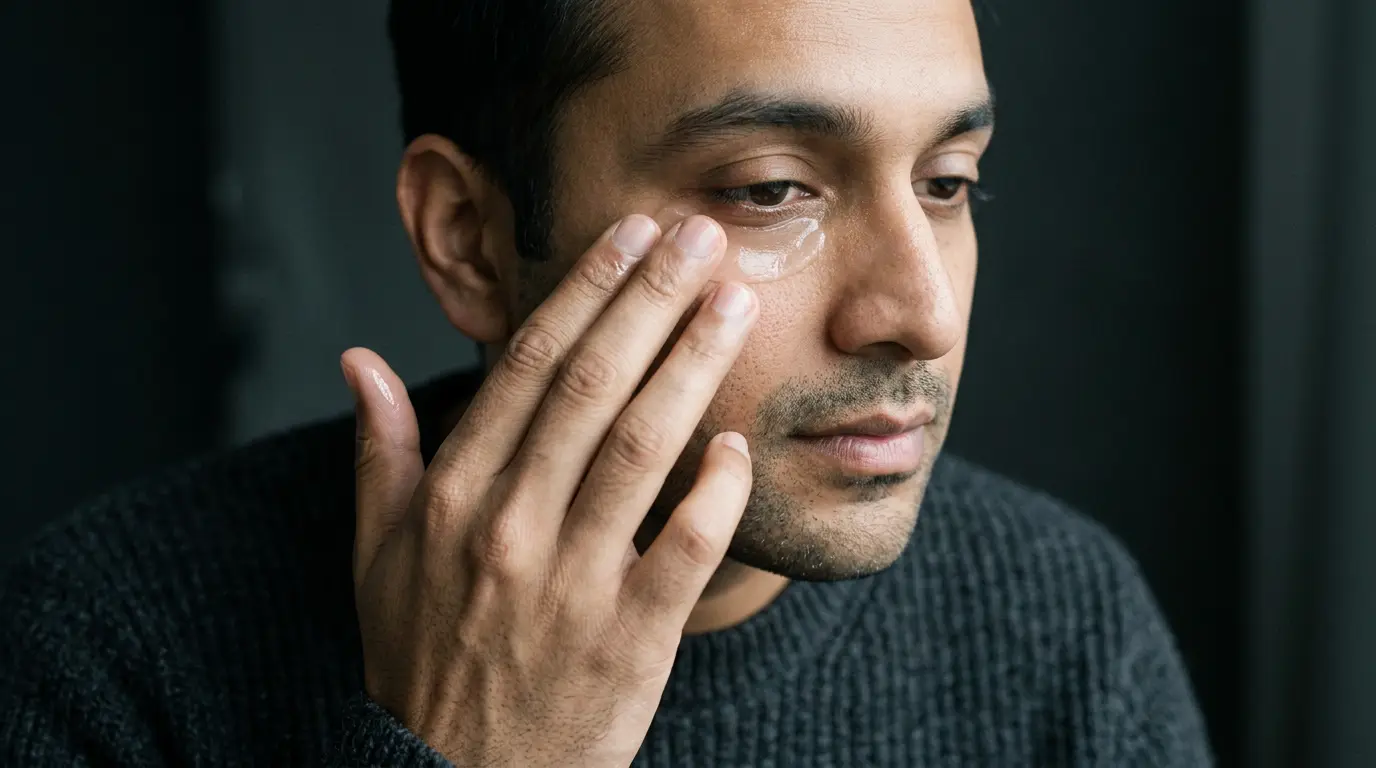
Beard Care and Skin: Fixing Ingrown Hairs and Razor Bumps
Why razor bumps and ingrown hairs happen, especially on curly Indian beard hair, and a step-by-step shaving and skincare plan to prevent and treat them.
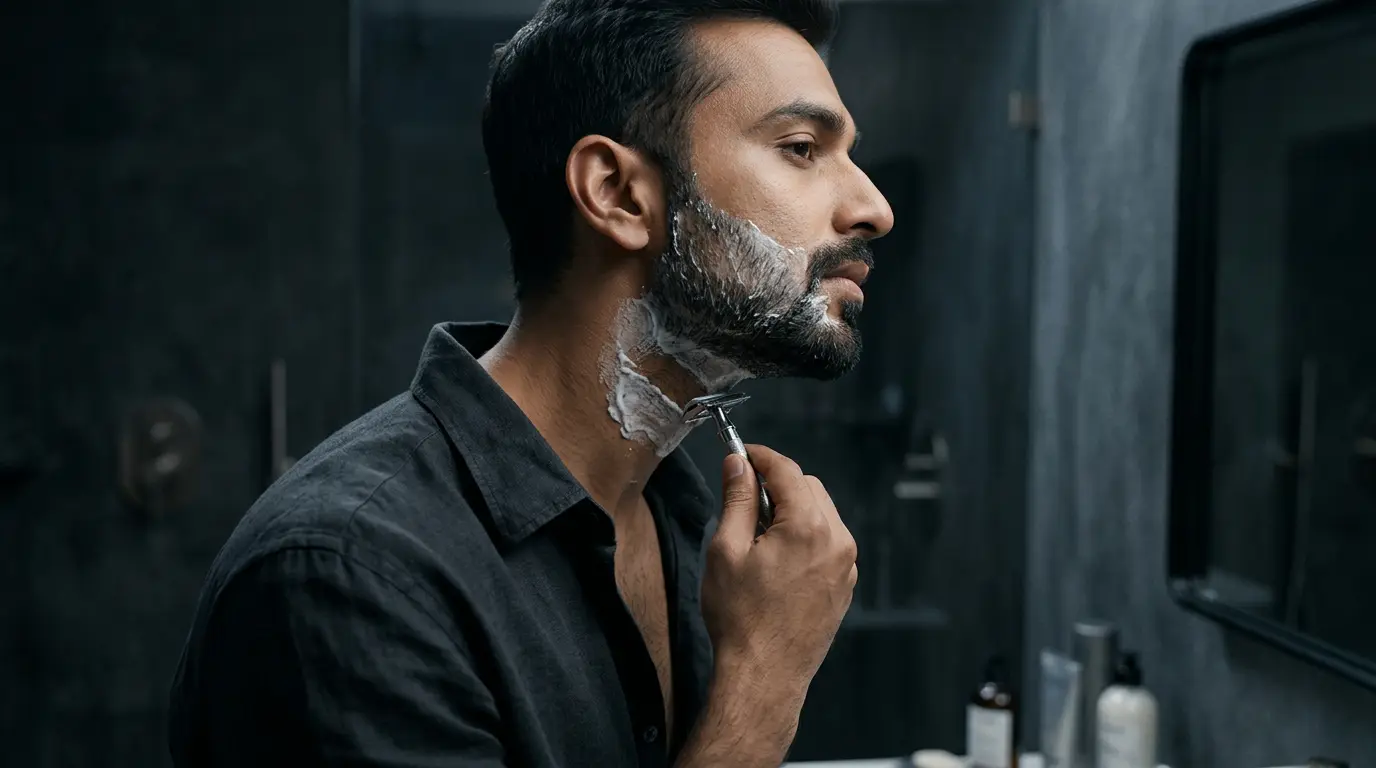
For many Indian men, shaving is the skincare problem. Red bumps along the jaw and neck, ingrown hairs that turn into dark spots, itchy stubble, and a rash that appears every time you shave for a meeting. The good news: nearly all of it is fixable with technique and a couple of products.
Why razor bumps happen
Razor bumps (doctors call them pseudofolliculitis barbae) happen when a shaved hair grows back into the skin instead of out of it. Your body treats the hair as a foreign object and reacts with inflammation: a red or dark bump, sometimes with pus.
Two things make it more likely:
- Curly or coarse hair. Hair that grows in a curve is more likely to curl back into the skin. Many Indian men have this hair type, especially on the neck.
- Very close shaving. When hair is cut below skin level, the sharp tip can pierce the follicle wall or skin as it regrows.
Ingrown hairs and razor bumps are closely related. The fix is the same.
The shave that prevents bumps
Before
- Soften the hair. Shave after a warm shower, or hold a warm, wet towel to your face for two minutes. Softer hair cuts cleanly and needs less force.
- Use a proper shaving cream or gel. Lather it, give it a minute. Avoid shaving with just water or soap.
During
- Shave with the grain, in the direction the hair grows. On the neck, hair often grows in several directions; feel it with your hand first.
- Do not stretch the skin. Stretching makes hair retract below the surface after cutting.
- Use a sharp blade. A dull blade drags and tugs. Replace blades every five to seven shaves.
- Fewer passes. Each pass removes skin as well as hair. Re-lather if you must go over an area.
After
- Rinse with cool water and pat dry.
- Apply a calming, alcohol-free balm or moisturiser. Ingredients like allantoin, panthenol, centella and niacinamide soothe the skin.
A close shave is a trade-off. The closer you go, the more likely your hair comes back the wrong way.
Consider a different tool
If you get bumps after every shave, change the tool:
- Single-blade or safety razors cut at skin level rather than below it.
- Electric trimmers that leave 0.5 to 1 mm of stubble almost eliminate razor bumps.
- Growing a short beard is the most reliable cure for severe bumps.
Treating bumps and ingrowns
Chemical exfoliation
Exfoliating acids help dead skin shed so hairs do not get trapped beneath it.
- Salicylic acid (BHA, 1 to 2%) penetrates pores and reduces inflammation. Good for oily skin.
- Glycolic acid (AHA) smooths the surface. Good for normal to dry skin.
Use a leave-on product two to three nights a week, on nights you are not shaving the next morning. Do not apply right after shaving.
Calming inflammation
For red, angry bumps, a thin layer of benzoyl peroxide 2.5% or For red, angry bumps, a thin layer of benzoyl peroxide 2.5% or azelaic acid can help. Azelaic acid also fades the dark spots that bumps leave behind, which is a common complaint on brown skin. can help. Azelaic acid also fades the dark spots that bumps leave behind, which is a common complaint on brown skin.
Warm compresses
A warm, damp cloth for a few minutes can soften the skin over a trapped hair and help it surface.
When to see a doctor
See a dermatologist if bumps are painful, filled with pus, spreading, or leaving scars. Prescription options and laser hair reduction can help in persistent cases.
Dark spots after bumps
On Indian skin, every inflamed bump can leave a dark mark (post-inflammatory hyperpigmentation). To fade them:
- Stop the bumps first: marks keep returning if bumps do.
- Use niacinamide or azelaic acid daily.
- Wear sunscreen on the neck and jaw, not just the face.
- Be patient: marks fade over 3 to 6 months.
Caring for skin under a beard
A beard protects you from razor bumps but brings its own problems: itch, flakes (beard dandruff) and clogged pores.
- Cleanse the beard and skin with your face wash, working it down to the skin with your fingertips.
- Moisturise the skin underneath with a light lotion.
- Use beard oil on the hair, especially the first few weeks of growth when itching is worst.
- Brush or comb daily to lift flakes and train hair direction.
- If flakes persist, they may be seborrhoeic dermatitis. An anti-dandruff shampoo with ketoconazole used on the beard twice a week often helps; consult a doctor if it does not.
Trimming and shaping without irritation
Many men switch to a trimmed beard to escape razor bumps, then get irritation along the neckline and cheek line where they still shave.
- Set the neckline about two finger-widths above your Adam’s apple. Shaving lower creates a large area of irritated, bump-prone skin.
- Use a trimmer for the edges instead of a blade where possible. A clean trimmed line looks sharp and causes far fewer ingrowns.
- Keep trimmer blades clean. Wipe them after use and oil them as the manufacturer recommends; a dull or dirty trimmer pulls hair.
- Do not trim on irritated skin. Give a flare-up a few days to calm down.
Threading and waxing the cheek line
Some men in India thread or wax the cheek line for a defined edge. Both remove hair from the root, which can cause ingrown hairs as it regrows, and the skin can darken afterwards. If you do it, avoid acids and retinol for two to three days before and after, use a calming moisturiser, and wear sunscreen on those areas.
Product checklist for bump-prone skin
- A gentle or salicylic acid cleanser
- A quality shaving cream or gel (not soap)
- A sharp single-blade razor or a trimmer
- An alcohol-free post-shave balm
- A leave-on exfoliant (BHA or AHA) for two to three nights a week
- Niacinamide or azelaic acid for dark marks
- Sunscreen for the jaw and neck
How long until bumps clear?
With better technique and a leave-on exfoliant, most men see fewer new bumps within two to three weeks. Existing bumps settle over four to six weeks as trapped hairs free themselves. The dark marks they leave behind take longest: three to six months with sunscreen and a brightening active. If you are still getting crops of new bumps after six weeks of careful shaving, switch to a trimmer or speak to a dermatologist.
The routine for bump-prone men
Shaving mornings: soften, shave with the grain, rinse, alcohol-free balm, sunscreen.
Non-shaving mornings: cleanser, moisturiser, sunscreen.
Two to three nights a week: cleanser, salicylic acid or glycolic acid, moisturiser.
Other nights: cleanser, niacinamide or azelaic acid for marks, moisturiser.
For your whole routine, start with our skincare routine for men in India.
Products mentioned
*Prices are approximate at the time of writing. Check the retailer for today's price, or compare all products.
Frequently asked questions
Should I pull out an ingrown hair?
Do not dig with tweezers or needles. If a hair loop is clearly visible at the surface, you can gently lift the end with clean tweezers, but never pluck it out completely or break the skin. Warm compresses and exfoliation help most hairs free themselves.
Do multi-blade razors cause more ingrown hairs?
They can, for some men. Multiple blades lift and cut hair below the skin surface, which makes it easier for curly hair to grow back inward. A single-blade razor or an electric trimmer may help if you are very prone to bumps.
Is beard oil good for the skin underneath?
Beard oil softens hair and can reduce itch, but very heavy oils may clog pores on acne-prone skin. Apply it to the hair, not as a skin moisturiser, and use a light facial moisturiser on the skin underneath.
This article is for education only and is not a substitute for advice from a qualified dermatologist. Patch test new products. See our medical disclaimer.