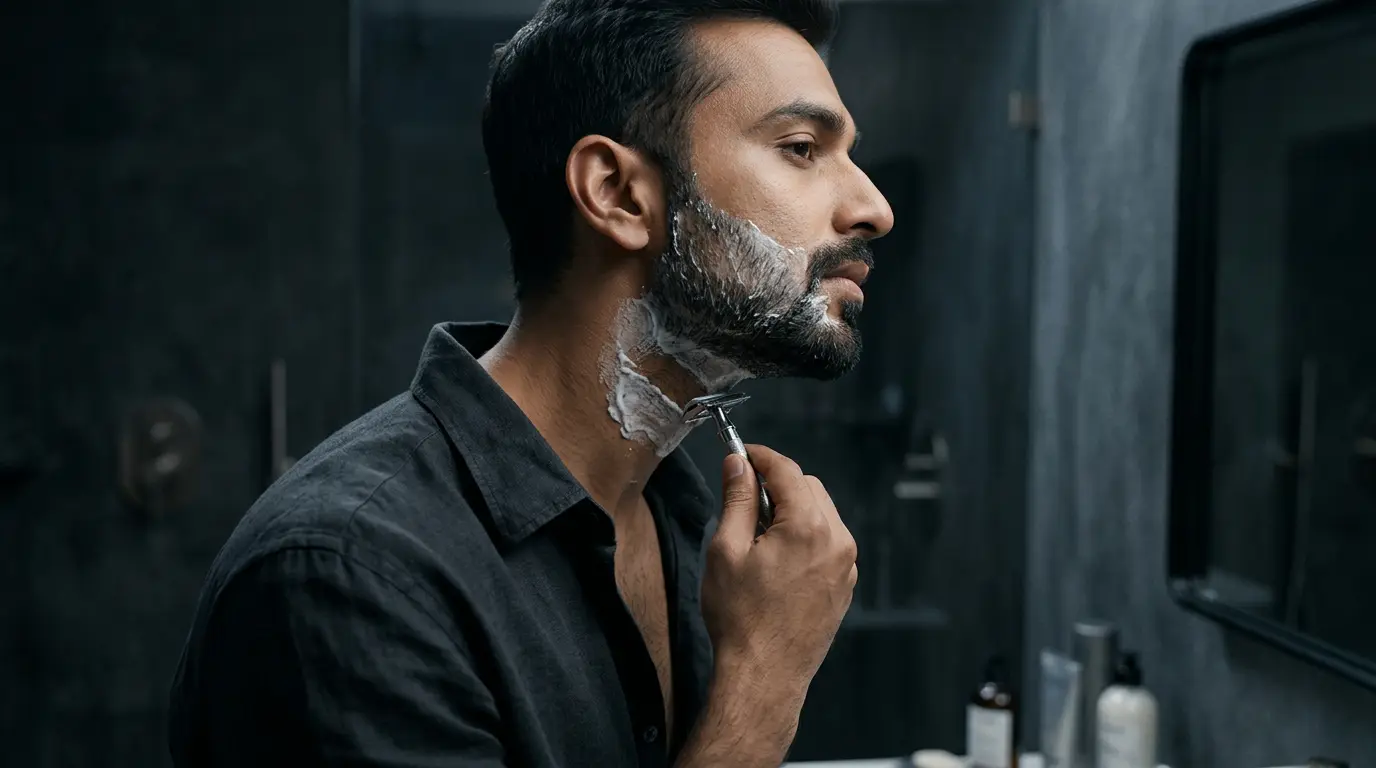
Beard Care and Skin: Fixing Ingrown Hairs and Razor Bumps
· 7 min read
Ingredient guide · Element 08
Glycolic acid is the smallest AHA, dissolving dead surface cells for smoother, brighter skin. Effective but strong; start slow, especially on brown skin.
✓ Verified ingredient · strong clinical evidence
In plain English: Skin that looks dull and feels rough, even when you’re doing everything else right? Glycolic acid clears away the dead surface layer so your face looks fresher. Use it a couple of nights a week, not every day.
Glycolic acid is an alpha hydroxy acid (AHA) derived from sugar cane. It has the smallest molecule of the AHAs, so it penetrates easily and works quickly, which makes it effective and also more likely to irritate than its gentler cousins, lactic and mandelic acid.
Start with a 5 to 8% leave-on toner or serum two nights a week on clean, dry skin, then moisturise. Never on the same night as retinol when you are starting out.
Normal, dry and combination skin with dullness or rough texture. Sensitive skin may prefer lactic or mandelic acid.
Glycolic acid works on the surface and suits dull, dry or uneven skin. Salicylic acid penetrates oil and suits oily skin with blackheads.
Over-use can irritate skin and trigger post-inflammatory hyperpigmentation, especially on brown skin. Start at 5 to 8%, use two nights a week, and wear sunscreen daily.
· 7 min read
· 8 min read