Pollution and Skin: A Delhi NCR Survival Guide
How air pollution affects your skin and a practical routine for Delhi NCR's smog season: cleansing, antioxidants, barrier repair and sunscreen.
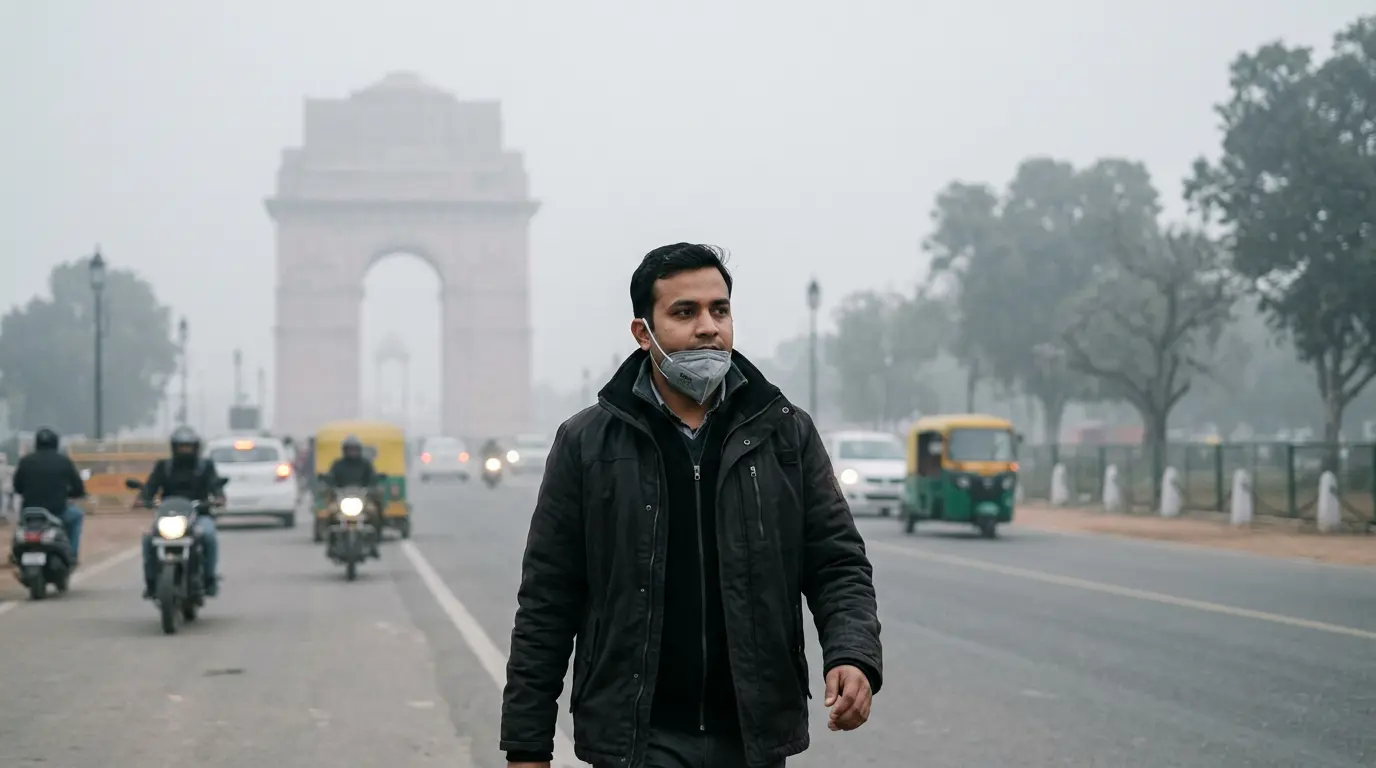
Every October and November, Delhi NCR’s air quality index climbs into the “very poor” and “severe” ranges. Most of the attention, rightly, goes to lungs. But your skin is your largest organ in direct contact with that air, and smog season shows up on your face too: dullness, breakouts, sensitivity and stubborn pigmentation.
Protecting your health comes first: follow official advisories, use an N95 mask outdoors and consider an air purifier. Then, here is how to look after your skin.
How pollution affects skin
Urban air pollution includes particulate matter (PM2.5 and PM10), nitrogen dioxide, ozone and polycyclic aromatic hydrocarbons from vehicle exhaust and burning. Research links these to:
- Oxidative stress. Pollutants generate free radicals, which damage lipids, proteins and collagen.
- Pigmentation. Studies have associated traffic-related pollution with more age spots and uneven tone.
- Barrier damage. Pollution can weaken the skin barrier, increasing water loss and sensitivity.
- Inflammation and acne. Particles mix with oil and sweat on the skin and may worsen breakouts.
- Accelerated ageing. Combined with UV, pollution appears to speed up visible ageing.
Step 1: Cleanse properly at night
Pollution particles, oil and sunscreen build up during the day. Removing them is the most important step.
- Double cleanse on heavy days. Start with a cleansing oil or balm (or micellar water) to dissolve sunscreen and grime, then follow with your regular face wash.
- Be gentle. No scrubs. No hot water. Massage for 60 seconds.
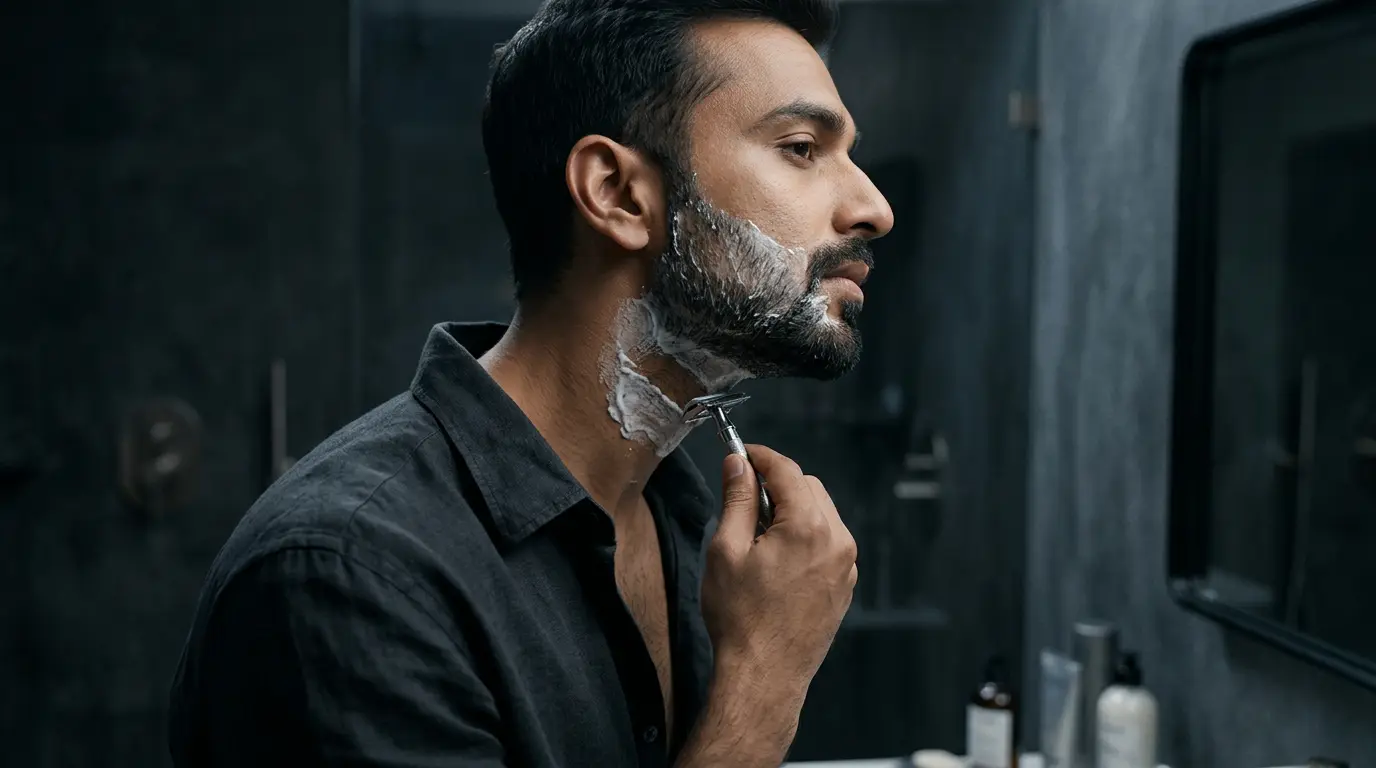
- Cleanse your beard thoroughly. Facial hair traps particles.
- Change pillowcases a couple of times a week during smog season.
Step 2: Antioxidants in the morning
Antioxidants neutralise free radicals before they damage skin.
- Vitamin C (L-ascorbic acid or stable derivatives): the most studied topical antioxidant, also brightens pigmentation. Apply after cleansing in the morning.
- Niacinamide: supports the barrier and reduces pigment.
- Vitamin E and ferulic acid: often paired with vitamin C to boost stability and effect.
- Green tea extract and resveratrol: supporting antioxidants found in many formulas.
Pollution is not something you can wash off once a week. It is a daily load, so your defence has to be daily too.
Step 3: Repair the barrier
A healthy barrier keeps pollutants out and moisture in. During smog season, many people’s skin becomes drier and more reactive, especially as the weather cools.
- Use a moisturiser with ceramides, cholesterol and fatty acids.
- Add hyaluronic acid on damp skin if your skin feels tight.
- Cut back on strong actives for a few weeks if your skin is stinging. Retinol and acids can wait.
Step 4: Sunscreen, every day
Smog can make the sky look grey, but UV still reaches you. Pollution plus UV is worse than either alone. Use SPF 30 or higher with PA+++ or PA++++ every morning. Some sunscreens include antioxidants or iron oxides (in tinted formulas) for additional protection against visible light.
The Delhi NCR smog-season routine
Morning
- Gentle cleanser
- Vitamin C serum
- Niacinamide (optional)
- Moisturiser with ceramides
- Sunscreen SPF 50 PA++++
Evening
- Cleansing oil, balm or micellar water
- Gentle face wash
- Hyaluronic acid on damp skin (if dry)
- Ceramide moisturiser
- Retinol two to three nights a week, only if your skin is calm
After long outdoor exposure
Rinse with water or use a gentle cleanser, then reapply moisturiser and sunscreen if you are heading back out.
Smog season by skin type
Oily and acne-prone: particles mixing with oil can mean more breakouts. Keep the salicylic acid cleanser at night, use a gel moisturiser, and do not skip the double cleanse when you wear sunscreen. Niacinamide is especially useful here.
Dry: smog season coincides with falling temperatures and drier air in NCR. Switch to a cream cleanser, add hyaluronic acid on damp skin, and use a ceramide cream. Consider an overnight balm on dry patches.
Sensitive or eczema-prone: this is the most difficult time of year. Simplify to cleanser, moisturiser and a mineral or gentle sunscreen. Pause fragranced products and strong actives. See a dermatologist if eczema flares.
Combination: gel moisturiser on the T-zone, a richer cream on the cheeks if they become dry.
What the evidence says about “anti-pollution” claims
Many products sold in India carry “anti-pollution” or “urban shield” claims. There is no regulated standard for these terms. Some brands test their formulas against particles or ozone in the lab; many do not. Useful questions to ask:
- Does it contain proven antioxidants (vitamin C, vitamin E, niacinamide, ferulic acid)?
- Does it support the barrier (ceramides, fatty acids)?
- Is it a sunscreen with broad UVA protection?
If the answer to all three is no, the claim is mostly marketing.
Hair and scalp
Pollution settles on the scalp and hair too, which can worsen dandruff and itchiness. Wash your hair more often during heavy smog weeks, and cleanse your beard every day.
A smog-season week, simplified
Monday to Friday: the core routine above, every day, with a double cleanse on commuting days.
Two nights a week: retinol or a gentle exfoliant, only if your skin is calm and comfortable.
Weekend: a hydrating sheet mask or extra moisturiser if your skin feels tight. Skip anything new.
When AQI is “severe”: minimise time outdoors, wear an N95 mask, cleanse as soon as you come in, and give your skin a rest from strong actives.
The goal is consistency rather than intensity. Ten minutes a day across November does more for your skin than a two-hour facial once the smog clears.
Habits that help
- Indoor air. An air purifier with a HEPA filter in your bedroom helps your lungs and skin while you sleep.
- Hydration and diet. Fruits and vegetables rich in antioxidants support overall health. They do not replace sunscreen.
- Do not smoke. Smoking adds a personal pollution load directly to your face.
- Wipe your phone screen. It collects grime that ends up on your cheek.
What to skip
- “Detox” charcoal masks used daily. Occasional use is fine; frequent use can dry skin.
- Harsh scrubs. They damage the barrier you are trying to protect.
- Too many new products at once. Smog season is when skin is most reactive.
When it is more than pollution
If you develop persistent redness, rashes, eczema flares or acne that does not settle with a gentle routine, see a dermatologist. Pollution can worsen existing skin conditions that need medical treatment.
Want a routine tuned for NCR’s swings between humid summers, smog season and dry winters? Choose “Extreme swings” in our Routine Builder. And see the vitamin C element for more on antioxidants.
Products mentioned
*Prices are approximate at the time of writing. Check the retailer for today's price, or compare all products.
Frequently asked questions
Do anti-pollution products really work?
'Anti-pollution' is a marketing label, not a standard. What helps is the ingredients: antioxidants like vitamin C and niacinamide, barrier-supporting ceramides, and thorough cleansing. Judge products by those, not the label.
Should I wash my face more during smog season?
Wash thoroughly twice a day and after long periods outdoors, but do not scrub or over-wash. Damaging your barrier makes skin more vulnerable to pollution, not less.
Does wearing a mask protect skin?
An N95 mask protects your lungs, which matters most. It also shields some facial skin, but can trap sweat and friction. Cleanse after long mask-wearing days and use a light moisturiser.
This article is for education only and is not a substitute for advice from a qualified dermatologist. Patch test new products. See our medical disclaimer.