Retinol for Beginners: How to Start Without Irritation
How to start retinol safely: which strength to buy, the sandwich method, a week-by-week schedule, what purging is, and how to use retinol in Indian weather.

Maybe you’ve noticed the first lines around your eyes in a group photo, or your skin just looks rougher than it did at 22. That’s when most people hear about retinol. Retinol has more clinical evidence behind it than almost any other over-the-counter skincare ingredient. It can smooth texture, soften fine lines, clear clogged pores and fade marks. It also has a reputation for making people’s faces red, flaky and miserable for a month.
That second part is avoidable. The difference is almost always how you start.
What retinol is
Retinol is a form of vitamin A. Retinoids are the family it belongs to:
- Retinyl esters (retinyl palmitate): very gentle, weak.
- Retinol: the most common over-the-counter retinoid.
- Retinal (retinaldehyde): one step closer to the active form, stronger than retinol.
- Adapalene: a synthetic retinoid used for acne. Some strengths are available over the counter in some countries; in India it is typically sold as a prescription product.
- Tretinoin: retinoic acid, prescription only.
Your skin converts retinol into retinoic acid, which then tells skin cells to behave more like younger cells: turning over faster and producing more collagen.
What it does
- Texture: smoother, more even skin surface.
- Fine lines: gradual improvement with months of use, thanks to increased collagen.
- Acne: prevents clogged pores by normalising how skin cells shed.
- Dark marks: faster turnover helps pigmented cells move out.
- Pores: cleaner pores look smaller.
Choosing your first retinol
For a first retinol, choose:
- 0.1 to 0.3% retinol if your skin is normal, dry or sensitive.
- 0.3 to 0.5% if your skin is oily and resilient.
- An opaque, airless or tinted container, because retinol degrades in light and air.
- A formula with soothing ingredients such as ceramides, A formula with soothing ingredients such as ceramides, niacinamide or squalane. or squalane.
Avoid going straight to 1%. It is not faster in any useful way: it just makes the adjustment phase rougher.
The beginner schedule
| Weeks | Frequency | Method |
|---|---|---|
| 1 to 2 | 2 nights a week | Sandwich method |
| 3 to 4 | 3 nights a week | Sandwich method |
| 5 to 8 | Every other night | Moisturiser after |
| 9+ | Nightly if comfortable | Moisturiser after |
Keep the nights spread out (for example Monday and Thursday). If your skin is irritated, go back a step.
The sandwich method
- Cleanse and pat skin completely dry. Damp skin absorbs retinol faster, which increases irritation.
- Apply a thin layer of moisturiser.
- Apply a pea-sized amount of retinol over the whole face, avoiding the corners of the nose, eyes and mouth.
- Apply another layer of moisturiser.
The moisturiser buffers the retinol so it reaches skin more gradually. It reduces irritation without cancelling the benefits.
Start low, go slow, and judge retinol at three months, not three days.
Purging vs irritation
When you start retinol, you may get a breakout in the first 2 to 6 weeks. This is often “purging”: retinol speeds up the turnover of microcomedones that were already forming, so they surface faster.
Purging happens in areas where you normally break out, looks like your usual spots, and clears faster than normal breakouts.
Irritation or a bad reaction looks like redness, burning, persistent stinging, or breakouts in places you do not usually get them. If this happens, stop, let your skin recover, and restart at a lower frequency or strength.
What not to mix
On retinol nights, skip:
- Strong exfoliating acids (glycolic, lactic, salicylic leave-ons)
- Benzoyl peroxide (it can degrade some retinoids and adds dryness)
- Physical scrubs
- Waxing or threading the treated area
Retinol pairs very well with niacinamide, , hyaluronic acid, ceramides and peptides., ceramides and peptides.
Retinol and Indian weather
India’s sun is the main challenge. Retinol makes the outer layer of skin thinner and more sensitive at first, and UV exposure undoes the collagen benefits. So:
- Use retinol only at night.
- Wear SPF 50 with PA+++ or higher every day, reapplying when outdoors.
- In peak summer, if you spend long hours outside, consider reducing frequency.
- In dry North Indian winters, use a richer moisturiser and the sandwich method longer.
Men, beards and shaving
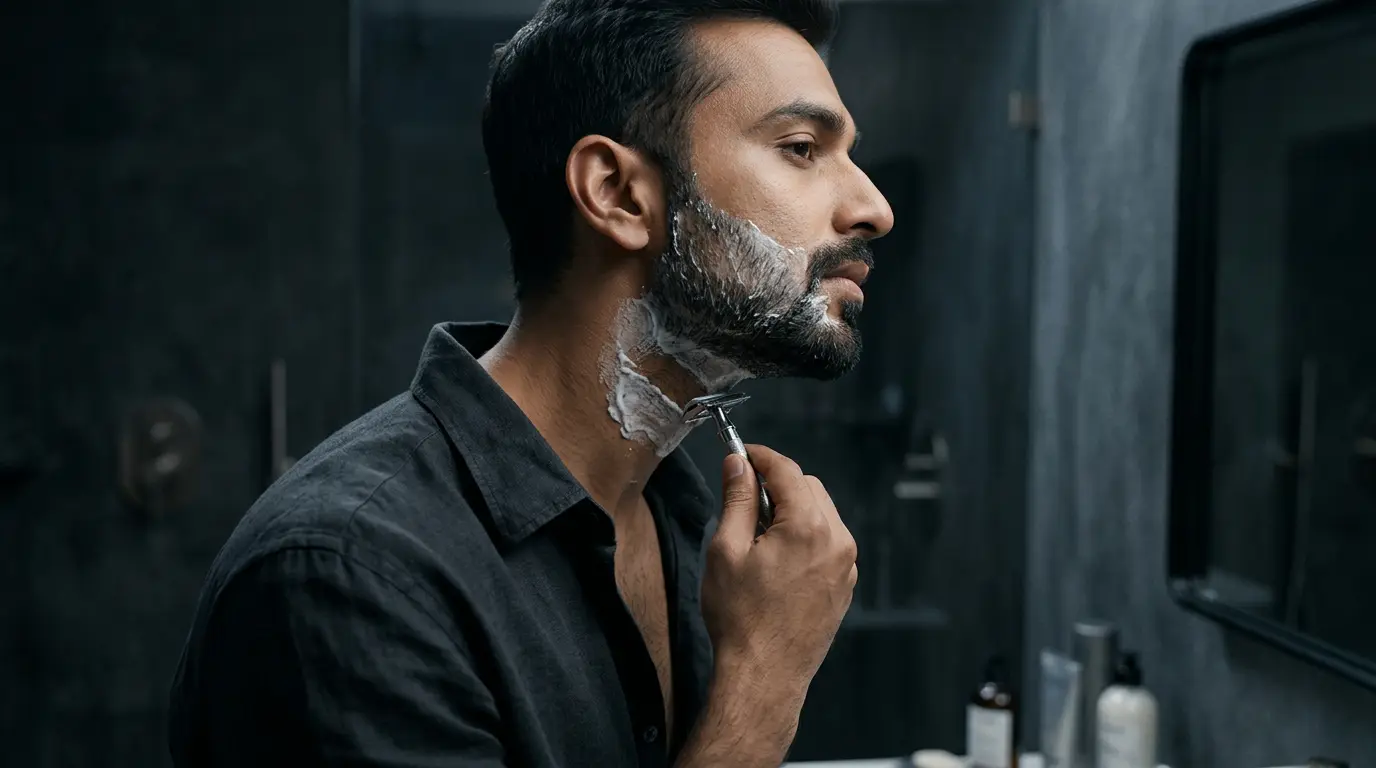
Shaving exfoliates, so freshly shaved skin plus retinol can sting. Apply retinol on nights you do not shave the next morning, or shave in the evening and apply retinol the following night. Under a beard, retinol is less useful and harder to apply, so focus on the cheeks, forehead and around the eyes (staying off the eyelids).
Retinol and dark skin tones
Retinol works well on brown Indian skin, and is often used to fade post-acne marks. But irritated brown skin can respond by producing more pigment. If retinol leaves you red and flaky for weeks, you risk new dark patches instead of fewer.
That is why the slow start matters even more here. Keep irritation low, keep moisturising, and treat any persistent redness as a sign to reduce frequency. Pairing retinol with niacinamide or azelaic acid (on alternate nights) gives a gentler route to even tone.
How to tell if it is working
Retinol changes are gradual, so take a photo in the same spot, same light, on day one. Compare at week 8 and week 16.
- Weeks 2 to 6: some dryness, maybe purging. Skin may look a little brighter.
- Weeks 6 to 12: smoother texture, fewer clogged pores, makeup or sunscreen sits better.
- Months 3 to 6: marks fade, fine lines soften, pores look tighter.
- Beyond 6 months: continued collagen benefits with consistent use and daily sunscreen.
Troubleshooting
Stinging when applying: your skin may still be damp, or your barrier is irritated. Wait 10 minutes after washing, and use the sandwich method.
Flaking around the nose and mouth: apply a thin layer of a barrier balm or petroleum jelly to those corners before retinol.
Redness that lasts into the next day: drop one night per week.
No change after three months: check your product is stored correctly and not expired, and that you are using it at least three nights a week. Consider retinal, or speak to a dermatologist about prescription retinoids.
Retinol and the eye area
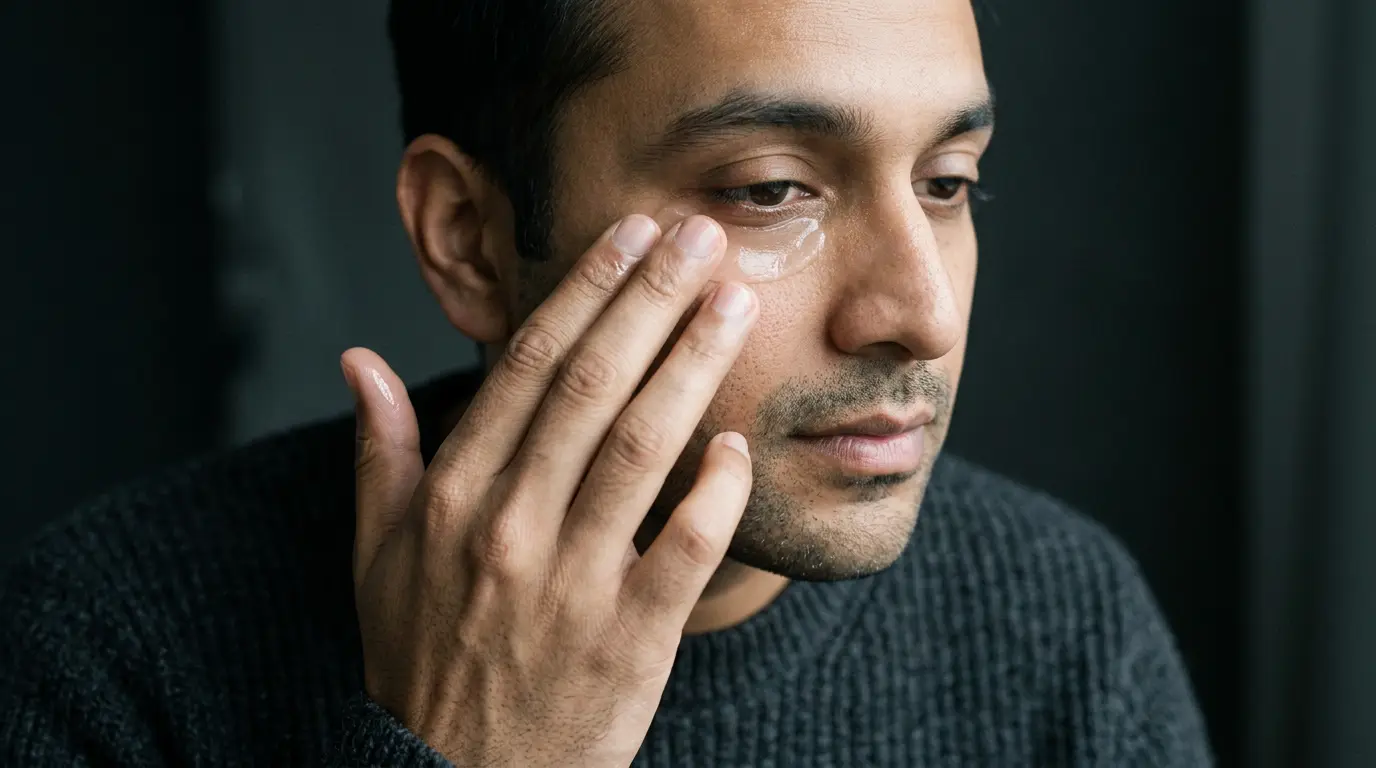
Fine lines usually show first around the eyes, but the skin there is thin and reactive. Once your face tolerates retinol well, you can apply a small amount on the orbital bone, staying off the eyelids. Alternatively, use a dedicated low-strength retinol eye product, which is usually milder.
Who should not use retinol
- Pregnant or breastfeeding women, or those trying to conceive.
- Anyone using prescription retinoids or isotretinoin (do not double up).
- People with active eczema or rosacea flares, without a dermatologist’s advice.
A full retinol routine
Morning: gentle cleanser, niacinamide or vitamin C, moisturiser, sunscreen.
Night (retinol nights): gentle cleanser, moisturiser, retinol, moisturiser.
Night (off nights): gentle cleanser, hydrating serum, moisturiser.
For more on combining products in the right order, see How to Layer Skincare Products. And for the full ingredient profile, visit the retinol element.
Products mentioned
*Prices are approximate at the time of writing. Check the retailer for today's price, or compare all products.
Re'equil
Ultra Matte Dry Touch Sunscreen SPF 50 PA++++
oilycombinationacne-prone
Frequently asked questions
At what age should I start retinol?
There is no magic age. Many people start in their mid-20s for prevention or earlier for acne. If your skin is healthy and you wear sunscreen daily, starting retinol between 25 and 30 is a common choice.
Can I use retinol in summer?
Yes, as long as you use it at night and wear sunscreen every day. In very hot, humid weather, a lighter gel or serum formula may be more comfortable than a cream.
Is retinol safe during pregnancy?
No. Retinoids, including retinol, are not recommended during pregnancy or while trying to conceive. Azelaic acid and niacinamide are safer alternatives. Speak to your doctor.
What is the difference between retinol and tretinoin?
Tretinoin is retinoic acid, the active form, and is prescription-only in India. Retinol must be converted by the skin into retinoic acid, which makes it gentler but slower. Both work.
This article is for education only and is not a substitute for advice from a qualified dermatologist. Patch test new products. See our medical disclaimer.